top of page
This is the Culture Factory Records logo.

LIQUID VINYL

Discover Culture Factory USA's incredible Liquid Vinyl editions and collectible CD vinyl replicas.
New Wave or Old Wave...
Music has never looked this good.
This is Killing Jokes's live album cover.

ADVERTISEMENT

Celebrating the music, stories, and independent spirit that shaped Generation X and continues to inspire new generations today.


Thanks for being here with us.

-Latchkey Boys

80's MUSIC TALK

This is a Rode Pod Mic.

We talk

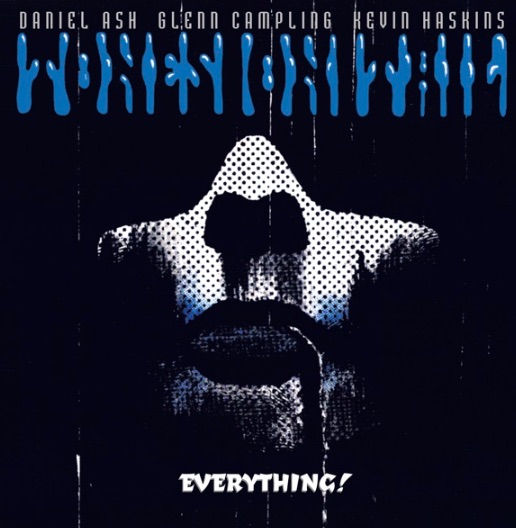
TONES ON TAIL

Everything!

We talk

CETU JAVU

Situations

We talk

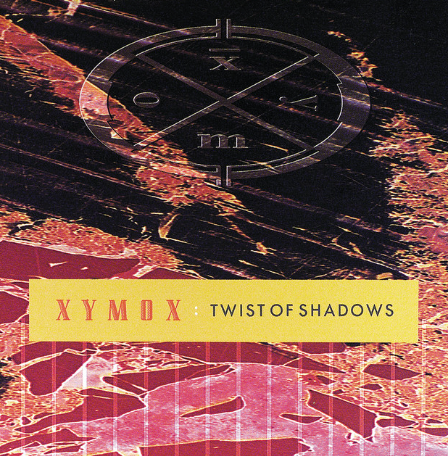
XYMOX

Twist of Shadows

We talk

DEPECHE MODE 1.0

Black Celebration

Explore More 80's Music Talk

This Week's Winner!

August 28, 2026

ALPHAVILLE

"Big In Japan"

Toby Key 1 Large.jpeg

Choose Next Week's Winner!

#1. LISTEN

#2. VOTE

Vote!
FRANKIE GO TO HOLLYWOOD: "Two Tribes"
BIG AUDIO DYNAMITE: "Rush"
THOMPSON TWINS: "Lies"

KEY OF THE WEEK

Winners

2nd place

3rd place

August 28, 2026
ALPHAVILLE
"Big In Japan"
ALPHAVILLE
"Forever Young"
ALPHAVILLE
"Seeds"
August 21, 2026
KILLING JOKE
"Change"
MIDNIGHT OIL
"Beds Are Burning"
THE DAMNED
"Anger"
August 14, 2026
HEAVEN 17
"Let Me Go"
ULTRAVOX
"Vienna"
THE HUMAN LEAGUE
"The Sound OF The Crowd"
August 7, 2026
THE SOUND
"Winning"
ECHO & THE BUNNYMEN
"Lost and Found"
P.I.L.
"The Body"
July 31, 2026
PAILHEAD
"Don't Stand In Line"
MEN WITHOUT HATS
"Where Do the Boys Go?"
THE CULT
"She Sells Sanctuary"

BLOG

2

We may have grown up, but we haven’t stopped discovering, creating, listening, laughing, or making a little noise. This is where we celebrate what Generation X is doing, loving, and becoming today.

Introducing our children to the music that changed us.

Learn that Poem...

I guess for most of us, our first musical memories were delivered by our parents and grandparents. Traditional lullabies, made-up lullabies with silly tunes, or storybooks containing some cringeworthy song—they introduced us to music before we even knew what music was.

I don’t know about you, but I’ve tried to erase some of those memories from my mind.


Ye Olde Hi-Fi

I’d rather think about the songs they introduced us to through AM radio, 8-tracks, and records. (Sorry…vinyl.)

We had a console hi-fi—a solid-wood piece of furniture that housed and hid the tuner, record player, 8-track player, and record storage. The speakers were built into the cabinet at each end.

It was 100% analog, 100% cool, and is now probably 100% crunched up in a landfill somewhere.

The Rolling Stones, Johnny Cash, Herb Alpert, Diana Ross, and The Moonglows…over and over again. I’m sure you could name at least three artists or songs from your own family’s rotation.

We basically listened to everything: rock (they call it “classic rock” now), soft rock, disco, jazz, country, and AM pop radio. We enjoyed most of it and suffered through some of it.

Funny—some of the songs I suffered through are the very same songs I’m perfectly happy to hear today.


Sharing Is Caring…

Our turn came roughly 25 years ago, if my math is correct. That puts many of us in the interesting position of having Gen Z children of our own.

I think I was playing “Eight Days a Week” when my first son was five years old.

That was it.

Just as it had for millions of kids before him, the music of the Fab Four infiltrated his ears and began establishing his love for music—our music. That part wasn’t especially surprising.

What surprised me was how quickly he memorized practically every Beatles song.


Oh, That Song Is From…

His musical tastes somewhat follow mine these days. New Wave and Dark Wave may only be tolerated, but they are usually recognized immediately.


I’d like to give my hi-fi—my Rogue Audio Sphinx—some of the credit. But perhaps the music reached him through DreamWorks, Pixar, and Disney animated movies. Maybe it came from a television commercial, a streaming series, or some silly YouTube video featuring one person shouting at another.

Whatever the source, the music that changed us found its way into his ears.

And it is still finding its way into the ears of his generation.


After all the Record Store Days I’ve attended, one of the most encouraging things I’ve noticed is how many young people show up. They flip through the bins, study the album covers, talk about different pressings, and become excited when they find the record they came looking for.


It makes me genuinely happy to see it.


Maybe passing along our music was never about convincing our children that our generation had better songs. Maybe it was about giving them the opportunity our parents gave us: the chance to hear something, feel something, and decide for themselves that it belonged to them too.


We didn’t just pass down the music.


We passed down the feeling.


Go them. Go us. Go Latchkey!


Thanks for being here!


—Latchkey Boys

You Might Be One of Us...


If your favorite radio station was the one that didn't sound like any other...


If hearing the B-side felt like discovering a secret...


If you loved collecting 12" singles of your favorite songs...


If you've spent years trying to remember a song you only heard once...


If discovering overlooked bands gives you more joy than following the latest trend...


If you believe some of the greatest songs were never the biggest hits...


If New Wave and Post-Punk helped shape the way you saw the world...


If your "coming of age" happened forty years ago—or you're discovering this music for the very first time...


Then you're in the right place.


Latchkey Boys isn't about nostalgia for nostalgia's sake. It's about celebrating the music, creativity, and independent spirit that continue to inspire us today.


Welcome. We're glad you found us.

This is a Ramones Album cover.

Newsletter #1

"Throw away your albums!"

My good friend tells me that sometime around May of 1976, one of his high school friends showed up stoned at 2:00 AM with a signed copy of Ramones and proclaimed:


“Throw away your Beatles, Rolling Stones, and Led Zeppelin albums! The future of Rock ’N’ Roll is here!”


Did his friend know every detail about this new band from Forest Hills?
Nope.


He based his cannabis-fueled declaration entirely on what he felt while the music blasted through his ears and scrambled his brain for two glorious minutes at a time.


I’ve always loved that story because, underneath all the late-night drama, he was really trying to do one thing:


He wanted someone else to hear what he was hearing and feel what he was feeling.


Growing up with our favorite music magazines, local New Wave radio stations, clubs, concerts, and record stores, we were lucky enough to stand on the front lines of the second British Invasion. We just wanted to get closer to the music we loved.


And somehow, decades later, we’re still listening to the same songs over and over again.


We bought the albums on vinyl. Then cassette. Then CD. Then remastered CD. Then digital. Then Hi-Res. Then deluxe editions. Then vinyl again.


At some point, we had to stop and ask ourselves:


Why?


Why do these songs still matter so much to us?


For most of our lives, we’ve also been asked another version of that same question by parents, spouses, friends, and now our kids:


“How can you keep listening to the same stuff over and over again?”


Maybe that’s why so many of us eventually retreat into the privacy of a good pair of headphones — so we can quietly think about the answer while listening to those songs…just one more time.


Audiophiles spend thousands — sometimes tens of thousands — of dollars chasing the perfect listening experience. Better speakers. Better amplifiers. Better cables. Better rooms.


But I don’t think they’re really chasing equipment (well, sometimes)

I think they’re chasing a feeling.


And, those feelings may have very little to do with technology at all.


When I think back to the tiny single-speaker AM/FM cassette radio I had as a kid, I’m pretty sure it delivered the exact same emotional impact we’re all still searching for today — and it did it pretty cheaply.


So instead of throwing hundreds of searchable facts at you about our favorite bands and musicians, we decided that the mission of the Latchkey Boys podcast when it comes to music is something simpler:


We want to awaken those feelings again and again.


That said… I would caution against throwing away your other albums.
Just in case they bring you good feelings too.


Thank you for being here.


— Latchkey Boys


Homework:

'Touch', by Seccession: A must if you want that feeling of being transported back to your room in 1984.

LATCHKEY

BOYS

NEWSLETTER

We will never sell or share your information, ever.

LATCHKEY LOVES

"Latchkey Loves celebrates the people whose creativity gave Generation X its soundtrack, its style, its tools, its toys, and its memories—and whose ideas continue to inspire us today."

A Master Meets The Cars

1979

THE CARS: Candy-O Album cover. Artwork by Vargas

The Artist Behind Candy-O


If there is one album cover that we absolutely love more than any other, it has to be The Cars’ 1979 masterpiece, Candy-O


There was a time when you would buy one album, bring it home, and carefully slice the right edge of the shrink without completely destroying it. A time before digital versions reduced album covers to tiny squares on our phones; the artwork was part of the experience. You studied it—along with the liner notes and lyrics—while listening to the record. You read every name and examined every detail.


For us, Candy-O is that album.


A Master Meets The Cars

The artist behind the cover was Alberto Vargas, a Peruvian-American illustrator born in 1896. Vargas became famous for the glamorous pin-up paintings he created for Esquire and later Playboy. His distinctive “Vargas Girls” helped define American pin-up art for generations.


By the time The Cars began working on their second album, Vargas was 83 years old and largely retired. That didn’t stop David Robinson—awesome drummer, collector of pin-up art, and the man responsible for much of The Cars’ early visual identity—from contacting him.


In an interview about the cover, David recalls visiting Vargas at his home. During the visit, Vargas kept pulling incredible original sketches out from under his bed. All the while, he was holding a cigarette with a precariously long ash dangling directly over the artwork.


Just imagine watching decades of art history nearly disappear with one badly timed flick of a cigarette.

Vargas reportedly made it clear that The Cars’ music wasn’t exactly his kind of music (he was born in 1896, for goodness sake). But he understood David’s vision for the cover—and that was what mattered.


Enter Candy—and a Ferrari

Vargas needed photographic references from which to create the painting. So David arranged a photo shoot at a Ferrari dealership in Beverly Hills.


The model selected for the shoot was named Candy Moore.


Candy.


Honestly, what were the chances? It was reportedly a complete coincidence, although it’s almost too perfect to believe.


Candy posed across the hood of a 1972 Ferrari 365 GTC/4, giving Vargas the reference he needed to create what would become one of the most recognizable album covers of the era.


I’m not sure today’s Ferrari dealer would be quite as accommodating. I imagine the conversation ending the moment someone asked, “Would you mind if our model climbed onto the hood?”


Two Generations of Creativity

What makes the story even more remarkable is the unlikely collaboration behind it. Alberto Vargas had helped define American popular art during the 1940s. Nearly four decades later, David Robinson brought his work into the New Wave era.


Vargas may not have completely understood the music, but he understood the image: glamorous, stylish, provocative, slightly dangerous, and unmistakably cool.


In other words, he understood The Cars.


The result wasn’t merely packaging for an album. The painting became inseparable from the music inside it. We can’t hear “Let’s Go,” “It’s All I Can Do,” “Dangerous Type,” or the title track without seeing that red-haired Vargas girl stretched across the hood of that Ferrari.


That is what the greatest album covers did. They didn’t just help sell the music.


They became part of the memory.


Watch David Robinson tell the story:
The Cars
Candy-O Expanded Edition—Interview with David Robinson About the Cover Artwork

This is a Rode Pod Mic.
'LATCHKEY BOYS Podcast' is coming soon.  In the meantime, join us in the garage where we continue to invent and figure things out. Very Latchkey!
IMG_4542 Medium_edited.jpg

Garage #10

Early Tunes

"My first memories of music,

I'll name three big ones. This is before we even, like, discovered new wave and post-punk. So since I was a little kid, my mother played John Denver's Greatest Hits constantly. Three Dog Night, Greatest Hits, and The Beatles' Sergeant Pepper's Lonely Hearts Club Band.  Three very different genres, if you will. But that's first when I just absolutely fell in love with the Beatles."

IMG_4542 Medium_edited.jpg

Garage #9

ROLAND TR 808

"If there is a synth in a song

....new or old, and it catches my ear, I am going to love it!  I think the Beatles opened that doorway for so many bands, which led to sampling and different ways of recording.  There were so many styles and sounds in the Post-Punk, New Wave, and Dark Wave genres. Rap, Pop, Post-Punk, New Wave, etc., so many bands and groups created their magic with a Roland 808.  Those noisy Panasonic transistors contributed so much to the soundtracks of our lives."

Explore The Garage

LATCHKEY

BOYS

NEWSLETTER

We will never sell or share your information, ever.

bottom of page